
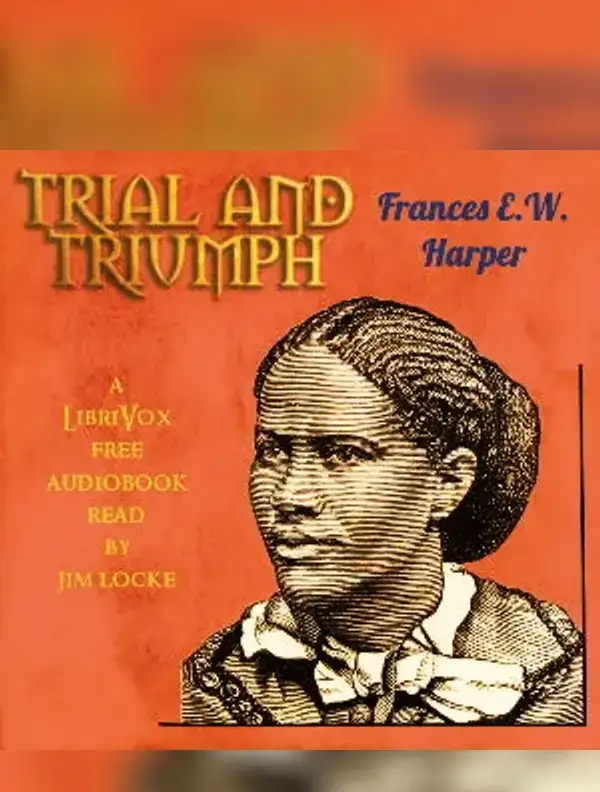
Long before late-twentieth-century writers reshaped the landscape of African American literature, Frances Ellen Watkins Harper was utilizing serialized fiction to chart the precarious terrain of moral integrity, self-reliance, and social uplift. Her work Trial and Triumph stands as a sharp, purposeful examination of how personal character withstands systemic adversity in post-Reconstruction America.
Trial and Triumph by Frances E. W. Harper is a late nineteenth-century domestic novel that follows the orphan Annette Harcourt as she navigates economic hardship, social prejudices, and moral crossroad events. Grounded in nineteenth-century Black Christian morality and uplift ideology, the narrative contrasts steadfast virtue with selfish opportunism. This book is best suited for literary historians, scholars of African American print culture, and readers who appreciate Victorian domestic fiction with a strong moral core. Readers looking for modern narrative pacing or complex anti-hero dynamics may find its overt didacticism less appealing.
| Metadata Field | Details |
|---|---|
| Author | Frances E. W. Harper |
| Original Serialization | 1888–1889 in The Christian Recorder |
| Genre | African American Literature / Domestic Fiction / Didactic Novel |
| Protagonist | Annette Harcourt |
| Primary Themes | Racial Uplift, Moral Integrity, Black Womanhood, Faith, Self-Reliance |
| Narrative POV | Third-person Omniscient |
| Textual Status | Serialized archival text (some historical fragments missing) |
Plot Overview & Premise
Set against the backdrop of late nineteenth-century social challenges, Trial and Triumph focuses on the life of Annette Harcourt, a young Black woman raised in modest and often difficult circumstances. Deprived of fortune or aristocratic lineage, Annette must construct her own path toward self-respect and economic security. Throughout the twenty-chapter narrative arc, her principles are constantly tested by societal expectations, deceptive acquaintances, and the realities of limited opportunity for women of color during the era.
Unlike contemporary sensationalist fiction, Harper constructs the plot as a sequence of moral tests. Annette encounters individuals who choose shortcuts to material success at the expense of honor, providing a direct contrast to her unyielding commitment to Christian ethics and intellectual growth. Through quiet perseverance, personal dignity, and emotional resilience, Annette overcomes every trial, eventually securing both public respect and romantic fulfillment. Because the novel was originally distributed chapter-by-chapter across issues of The Christian Recorder, certain textual fragments have been lost over time, yet the primary plot arc remains clear and cohesive.
Key Themes & Literary Analysis
At the center of Harper’s narrative strategy is the ideology of racial uplift—a cultural movement emphasizing education, moral rectitude, and community responsibility as vital tools for African American advancement. Harper uses Annette Harcourt not merely as an individual character, but as an exemplar of Black womanhood capable of redefining social perceptions through personal character.
- Moral Agency as Resistance: In a post-Reconstruction society that continually systematically disenfranchised Black women, Harper highlights moral choices as an arena where individuals hold ultimate agency. Choosing integrity over compromise becomes an act of personal empowerment.
- Education and Intellectual Self-Defense: Literacy and self-improvement are recurring priorities. Annette’s growth is tied to her intellectual curiosity and spiritual discipline rather than vanity or material accumulation.
- The Role of Black Print Culture: Originally published in the organ of the African Methodist Episcopal (AME) Church, the story served both an entertaining and pedagogical function for its original nineteenth-century readership, offering clear practical ethics through serialized drama.
Who Should Read This?
Understanding whether this historical work aligns with your reading preferences depends on what you seek in classic literature:
Recommended For:
- Literary Historians & Students: Readers seeking early foundational works in African American women’s writing and nineteenth-century serialized fiction.
- Fans of Victorian Domestic Novels: Readers who enjoy virtue-tested narratives similar to works by George Eliot or Harriet Beecher Stowe.
- Scholars of Print Culture: Those interested in the historical role of Black periodicals like The Christian Recorder in shaping community ethics.
Consider Skipping If:
- You prefer fast-paced, action-heavy plotlines without explicitly moralizing commentary.
- You are bothered by occasional textual gaps or missing archival passages resulting from historical preservation issues.
Frequently Asked Questions
Is Trial and Triumph a standalone novel or part of a series?
Trial and Triumph is a standalone novel, though it shares strong thematic similarities and ideological goals with Frances E. W. Harper’s other serialized works, including Minnie’s Sacrifice, Sowing and Reaping, and her famous book Iola Leroy.
Why are some portions of the original text missing?
Because the novel was serialized in issues of nineteenth-century newspapers rather than published immediately as a bound book, historical archives suffered partial loss or degradation over the decades before modern scholars recovered and preserved the text.
What is the central lesson of the novel?
The story demonstrates that steadfast adherence to moral integrity, faith, and self-respect ultimately triumphs over temporary trials and societal prejudices, offering an inspiring model for personal conduct.