
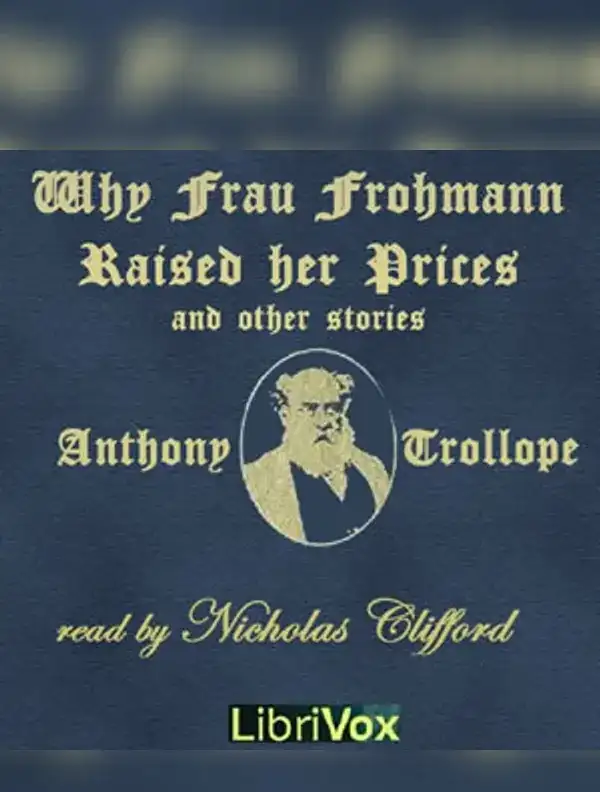
When economic shifts collide with entrenched tradition, human character reveals its most humorous and poignant contradictions. Anthony Trollope’s 1882 anthology, Why Frau Frohmann Raised Her Prices and Other Stories, captures late-Victorian anxieties surrounding financial inflation, social obligation, and female self-reliance across five distinct novellas.
In Why Frau Frohmann Raised Her Prices and Other Stories, author Anthony Trollope delivers a compelling collection of Victorian realistic fiction exploring inflation, romantic duty, class structure, and female employment. Best suited for lovers of 19th-century classic literature and historical social commentary, this anthology may prove less appealing to modern readers seeking high-stakes suspense or rapid plot developments.
| Author | Anthony Trollope |
|---|---|
| Original Publication Date | 1882 |
| Genre | Victorian Fiction / Short Story Collection |
| Narrative Perspective | Third-Person Omniscient |
| Primary Themes | Economic Realism, Female Autonomy, Social Class, Moral Duty |
| Target Audience | Fans of classic British literature, Victorian history, and social satire |
Plot Overview & Premise
This collection brings together five of Trollope’s shorter works, originally published across various periodicals in the late 1870s, showcasing his versatility as a chronicler of everyday domestic and economic life.
Why Frau Frohmann Raised Her Prices
Set in the picturesque Brunnenthal valley in the Tyrol, the title story centers on Frau Frohmann, a proud, deeply ethical innkeeper who resists increasing the rates for her guests despite rising supplier costs and local inflation. Viewing price hikes as inherently dishonorable, she attempts various cost-saving measures until forced to confront the unyielding laws of modern economics.
The Lady of Launay
This novella explores the friction between aristocratic tradition and genuine affection. Bessy Pryor, an orphan raised under the patronage of Lady Launay, falls in love with the family heir, Philip. When Lady Launay attempts to break the engagement by banishing Bessy to Normandy, both lovers must navigate family pressure, duty, and constancy.
Christmas at Thompson Hall
A lighthearted farce, this tale follows Mrs. Brown as she travels with her sick husband during the holiday season. While trying to fetch a mustard plaster for her ailing spouse in a dimly lit hotel, she inadvertently wanders into the wrong bedroom and applies the remedy to an unsuspecting stranger, setting off a sequence of comical misunderstandings.
The Telegraph Girl
One of Trollope’s most progressive works, this story provides an insider’s look at the lives of Lucy Graham and Sophy Wilson, two young single women working for the Government Telegraph Office in London. The narrative examines their working conditions, financial independence, and personal choices regarding marriage and security.
Alice Dugdale
The final story presents Alice Dugdale, a selfless daughter of a country doctor who manages her family’s modest household. When Major Rossiter returns to the village, he must choose between the modest, capable Alice and the polished, ambitious daughters of the wealthy Lady Wanless.
Key Themes & Literary Analysis
- Economic Realism and Modernity: Trollope uniquely integrates economic principles into domestic fiction. Frau Frohmann’s struggle is a grounded exploration of currency devaluation, supply and demand, and the inevitable shift from feudal generosity to modern capitalism.
- Female Autonomy and Labor: Through “The Telegraph Girl,” Trollope offers a rare, sympathetic look at urban, self-supporting female workers. Lucy Graham represents the emerging Victorian working woman who balances financial independence with moral integrity.
- Class Duty vs. Personal Choice: Both “The Lady of Launay” and “Alice Dugdale” critique rigid class expectations surrounding marriage, questioning whether birth and fortune should outweigh personal merit and devotion.
Who Should Read This?
Pros
- Offers insightful historical depictions of 19th-century female employment and economic shifts.
- Features Trollope’s signature dry wit, clear prose, and nuanced character observations.
- Provides a balanced mix of light comedy, romantic drama, and social commentary.
Cons
- The deliberate pacing and detailed financial discussions in the title story may feel dry to some readers.
- Episodic plots reflect the original magazine serialization style rather than an interconnected novel.
Frequently Asked Questions
Is this collection connected to Trollope’s Barsetshire or Palliser series?
No, these five novellas are standalone works separate from Trollope’s major series. They cover a range of settings from rural Europe to Victorian London, making them accessible to readers unfamiliar with his longer serial novels.
What makes “The Telegraph Girl” historically significant?
Published in 1877, “The Telegraph Girl” is notable for its early, realistic depiction of female civil servants in London. It offers valuable historical insight into women entering the clerical workforce during the late 19th century.
Are these stories comedy or drama?
The collection contains a mix of tones. “Christmas at Thompson Hall” is a humorous farce, while “Why Frau Frohmann Raised Her Prices” and “The Telegraph Girl” lean toward realistic social commentary and character studies.