
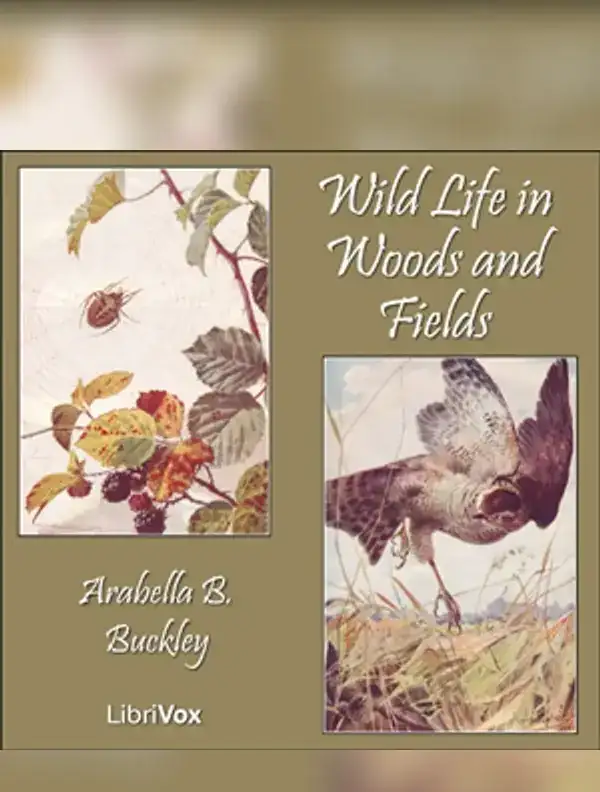
Long before digital media replaced direct encounters with the natural world, Victorian science communicator Arabella B. Buckley recognized that the true secret to teaching biology to children lay in gentle narrative inquiry rather than rote memorization. Her classic work serves as an inviting bridge between everyday outdoor play and foundational scientific understanding.
Arabella B. Buckley’s Wild Life in Woods and Fields is an introductory natural history book designed to cultivate observational skills and environmental appreciation in young readers. Through accessible, story-driven vignettes focused on common British wildlife—including spiders, squirrels, skylarks, ants, and moles—Buckley transforms basic ecological concepts into engaging outdoor discoveries. This work is best suited for young nature enthusiasts, primary school educators, and homeschool families following living-book curricula; those seeking modern, technical scientific texts or high-stakes fictional plots may find it overly simple.
| Attribute | Details |
|---|---|
| Author | Arabella B. Buckley (Arabella Burton Buckley) |
| Publication Era | Early 20th Century (1901) |
| Genre | Children’s Non-Fiction / Nature Study / Educational Literature |
| Narrative Style | Conversational, narrative-driven instructional prose |
| Target Audience | Children (Ages 6–10), Charlotte Mason educators, vintage nature readers |
| Key Themes | Observation of nature, ecological interdependence, animal adaptations |
Plot Overview & Premise
Unlike traditional fiction, Wild Life in Woods and Fields operates as a structured series of field excursions. Each chapter focuses on a specific plant, insect, or animal commonly found across temperate fields, commons, and woodlands. Buckley guides the reader’s eye to details that typically go unnoticed during a casual walk in the countryside.
The text opens by establishing fundamental habits of observation before guiding readers through specific ecological encounters. Lessons highlight the clever construction of a woodpecker’s nest, the delicate arrival of early spring flowers, and the winter preparations of a squirrel family. Readers observe the hidden architecture of anthills, the underground burrows of moles, and the hunting strategies of spiders on the common. By treating local flora and fauna as compelling characters in an ongoing natural drama, Buckley shows how every creature plays a functional role in its immediate ecosystem.
Key Themes & Literary Analysis
1. Direct Observation as Foundation for Science
Buckley prioritizes hands-on sensory exploration over textbook abstraction. The core thesis across every chapter is that young scientists must learn to look closely, listen carefully, and respect the lived reality of small creatures. This approach anticipates modern experiential learning techniques, encouraging children to step outside and verify scientific principles firsthand.
2. Sympathetic Realism Without Excessive Anthropomorphism
While many contemporary children’s writers of her era relied heavily on fairytale tropes or exaggerated animal personification, Buckley maintains respect for biological fact. She presents animals with empathy—describing their struggles to build homes, secure food, and raise offspring—without attributing unrealistic human emotions to them. This balance allows young readers to build genuine ecological literacy.
3. Adaptation and Interconnectedness
Having served as secretary to the famous geologist Charles Lyell, Buckley was deeply versed in evolutionary science. In this volume, she distills concepts of adaptation and biological function into simple, clear explanations. Whether detailing how a shrew’s specialized diet dictates its foraging habits or how seed dispersal works in nut-bearing trees, she continuously highlights how physical traits match environmental needs.
Who Should Read This?
Recommended For:
- Homeschoolers and Nature Study Educators: An ideal resource for parents following Charlotte Mason or nature-centered educational philosophies that value “living books.”
- Young Outdoor Explorers: Children ages 6 to 10 who love catching bugs, searching for nests, and wandering through parks or woods.
- Collectors of Vintage Science Literature: Enthusiasts interested in Victorian and Edwardian approaches to science communication and nature writing.
Who Might Want to Skip:
- Readers Seeking Modern Scientific Manuals: Modern readers looking for updated taxonomy, photographic illustrations, or contemporary conservation metrics may find the historic phrasing outdated.
- Fans of Narrative Fiction: Those expecting a continuous plot, dramatic character arcs, or anthropomorphic animal adventures like The Wind in the Willows will find this strictly educational format distinct.
Frequently Asked Questions
Is this book part of a larger educational series?
Yes. Wild Life in Woods and Fields was originally published as Book 1 in Arabella Buckley’s popular Eyes and No Eyes series, a set of short books created to teach natural history and basic science to children through clear visual observation.
Is this book appropriate for young independent readers?
The book is written in clear, direct English suitable for confident primary readers (around ages 8–10) to read independently, though it also works exceptionally well as a read-aloud book for younger children during nature study lessons.
Are the scientific facts in this classic text still accurate today?
The core observational facts regarding animal habits, nest building, insect structures, and plant life remain accurate and valuable for primary-level nature study, though the vocabulary reflects early 20th-century phrasing.